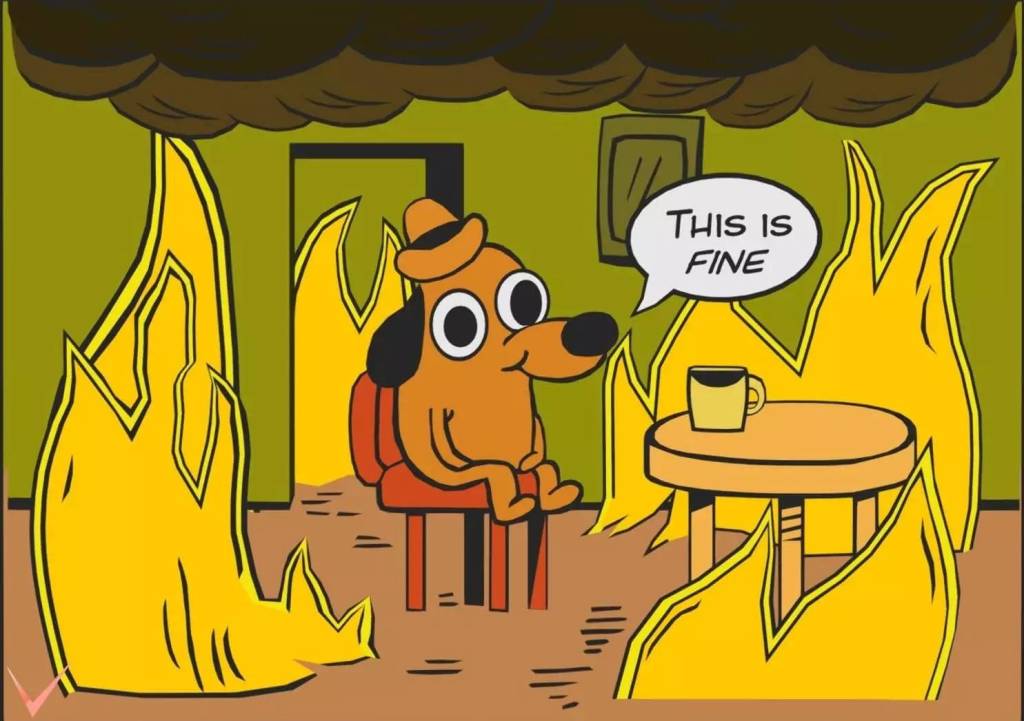
In December 2022, I forgot how to breathe normally. I no longer trusted my body to take in air on its own, so I would take over and try to pull in as much oxygen as possible. It turns out this is a recipe for a panic attack because you end up with too much carbon dioxide if you’re not breathing out sufficiently (I wasn’t). Cue the lightheadedness, shallow breathing, and racing heart like you’re being chased by a lion from the comfort of your living room couch.
The first time I can remember feeling this — a quiet escalation from familiar nerves into a spike of true fear — was for just a moment when I got the very first Covid-19 vaccine. Maybe it was standing in line for hours surrounded by masked strangers, or the needle I’ve always dreaded and had to look away from. Whatever it was, I felt anxiety flood through me in that moment, though I didn’t fully understand what was happening at the time. And then I began to notice that same feeling in other parts of my life.
One moment I would be fine, and the next I would notice my breathing and deem it insufficient. My inhales would first elongate and then quicken, air getting trapped in my upper chest and I would feel walls start to close in around me, even outdoors. Once the cycle was established, it took less and less time for me to work myself up into a state of near hyperventilation.
This went on for weeks, and then months. The feeling crescendoed — on subway platforms at rush hour, taking the tunnel home, in the booth of a basement pizza parlor surrounded by close friends, in my living room looking out at a dank grey sky, glancing untrustingly at elevator walls — until I could no longer ignore it or rationalize it away.
It wasn’t until I spent nearly 48 hours lost in a cloud of panic that I finally started to listen. I lay on my carpet trying and failing to get my heart rate back to normal. The fear of my body spiraling out of my control took me to the emergency room where doctors checked my heart and lungs to ensure all was functioning properly. I remember lying on the bed in the exam room telling them, “It’s probably just anxiety.” They very nicely proceeded with an ECG scan and a chest x-ray anyway and referred me to other doctors. They weren’t just humoring me, but they had no remedy for me either.
I saw my primary care provider and she asked me what had been happening in my life. I ticked off a list of “cool things”: I moved across the country to New York City, I got engaged, planned a massive wedding, got married. At this point there wasn’t a need to remind anyone about the years-long shutdowns, isolation, and health-mania that came with the pandemic.
It’s obvious in hindsight and she even told me then that everything I had been up to: moving far from home, entering married life, planning the biggest event of my life — these are some of the most acute stressors I would ever encounter. And they came for me at a uniquely stressful time. I could only ignore my nervous system’s need to decompress for so long.
I began to understand that my body was screaming for me to sit up and listen. It surprised me because I thought of myself as a healthy person. I was active and had been into meditation since an extended bout of depression in my 20s. Because of that experience, I thought I’d already dealt with the issues that could lead to a nervous breakdown like this.
Little did I know there was so much more that I had yet to unearth. Those couple of panic-filled days kicked off months of therapy, self-care, and re-focusing on my health in hopes of understanding what my body needed. It turned out there were harmful behaviors ingrained in me that went all the way back to my infancy. And there was one big thing I had to deal with first: grief. More on that next week.

 Mohini Kundu
Leave a comment